

Learn the structure of an aircraft engineering course in Malaysia, from core modules to practical learning and assessments.
The Structure of an Aircraft Engineering Course in Malaysia
Students who are interested in aviation and engineering often look for degree programmes that provide both technical depth and a clear academic pathway. An aircraft engineering course in Malaysia is usually structured to help students build knowledge step by step. Beginning with fundamental engineering subjects before moving into more specialised aircraft-related topics. Understanding this structure can help students evaluate whether the programme matches their interests, learning style, and long-term academic plans.
Most degree programmes in this field are designed around progressive learning. This means students are first introduced to the scientific and mathematical principles that support engineering. Gradually students will develop the ability to apply those principles to aircraft systems, design, and analysis. Rather than focusing only on one area from the beginning, the course structure typically creates a broad foundation before narrowing into more specific technical content.
Foundation in Core Engineering Subjects
In the early stage of an aircraft engineering course in Malaysia, students usually study core modules that are shared across many engineering disciplines. These often include:
- Mathematics
- Physics
- Mechanics
- Thermodynamics
- Materials
- Computing
The purpose of these subjects is to give the theoretical understanding needed for more advanced engineering work.
This stage is important. Aircraft engineering depends on accurate calculations, scientific reasoning, and an understanding of how systems behave under different conditions. By developing basics first, students are better prepared to handle the more specialised aerospace and aircraft-related topics.
Progression into Specialised Aircraft Topics
As the course develops, the structure usually shifts towards modules that are more directly related to aircraft engineering. These may include aerodynamics, propulsion, structural analysis, flight mechanics, and control systems. At this point, students begin to see how earlier mathematics and science subjects connect to real engineering applications in aviation.
An aircraft engineering course in Malaysia is often arranged so that each stage builds on what has already been taught. For example, students first learn the principles of forces and motion before applying them to aircraft stability or system performance. This gradual progression helps students connect theory with technical understanding in a more organised and manageable way.
Practical Learning and Project Work
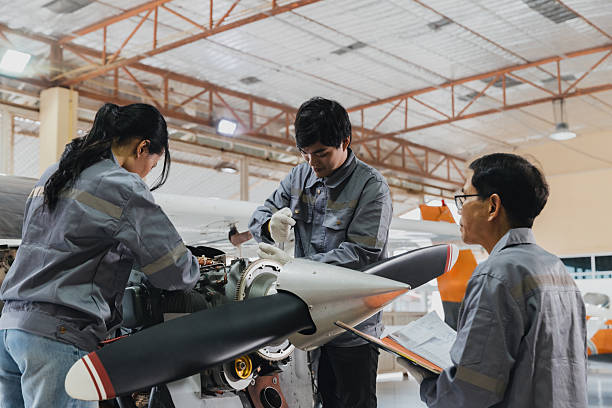
In addition to lectures and theory-based modules, many programmes include practical elements as part of the course structure. These may take the form of laboratory sessions, design exercises, simulation tasks, and group projects. Practical learning helps students apply classroom knowledge to structured engineering problems and understand how technical decisions are tested and evaluated.
Project work is also a common part of the learning process. Students may be asked to complete design studies, technical reports, or collaborative assignments. These works may reflect how engineering problems are approached in academic and professional settings. This adds another dimension to the aircraft engineering course in Malaysia. As students are not only learning concepts but developing methods of applying and communicating them.
Conclusion
Understanding course structure is an important part of choosing the right degree. An aircraft engineering course in Malaysia is generally organised to move from broad engineering fundamentals to more specialised aircraft topics. This progression is supported by practical learning and varied assessment.
For students considering this path, reviewing the structure of the programme can provide a clearer picture of what to expect. This can make it easier to choose a course that fits both their academic strengths and their interest in aircraft engineering.
More from the blog: SAP Business Transformation Services Malaysia: Moving Beyond a “System Upgrade and Insolvency Lawyer Malaysia: Legal Guidance for Financial Challenges.